COORDINATOR
Gemma 4 26B
Connects questions with catalog lookups and compatible specialist tools. Workflow performance remains under evaluation.
Local text coordinationOncoloHealth brings cancer datasets, specialist models, and evaluation into one research workbench—so the next discovery can build on the last.
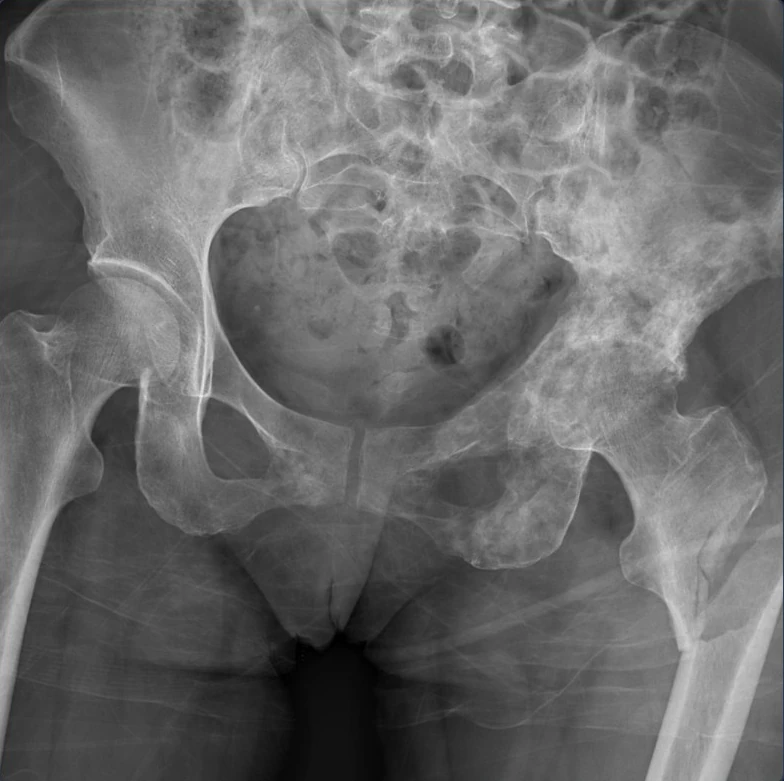 BONE X-RAY / BTXRD
Our BTXRD audit found duplicate images and label conflicts. Patient grouping remains unresolved.
Explore the audit ↗Cancer research moves fast. The work of finding, understanding, and comparing the building blocks is often repeated from scratch.
We’re building a place to bring that work together: the datasets, the models, the provenance, and the questions that still need answers.
Why the evidence matters ↗Explore the datasets, models, and research behind each stage of the work.
Duplicate images and contradictory labels can change how a study is interpreted.
We reconciled image files, annotations, and published split lists. Four contradictory copies were excluded from a corrected exploratory split.
The release does not provide reliable patient or lesion grouping. The audit cannot establish patient independence.
Explore the evidence behind our work, the tools being built, and the team bringing them together.
Our current work examines cancer datasets, compares model adaptations, and records the choices that shape each result. Explore the BTXRD release audit and the evaluations below.
Frozen RAD-DINO and ResNet-50 encoders, compared across three endpoints.
READ THE SOURCE-SHIFT REPORT ↗BTXRD is a public bone-tumor X-ray dataset. Our release audit investigated image identity, annotations, labels, and published split lists.
Read the audit ↗Every change needs a reason and a record. The audit distinguishes confirmed inconsistencies from questions that the release cannot resolve.
Read the source paper ↗Four contradictory copies were excluded from a corrected exploratory split. This does not establish that every duplicate or label error has been found.
Filenames in the published classification lists were missing their true extension. The release contains 1,867 tumor annotations.
A separate search surfaced near-duplicate candidates. Candidate matches require review before exclusion.
The release does not supply a reliable patient or lesion mapping. Duplicate screening alone cannot establish patient independence; diagnostic reference evidence also needs review.
Exploratory image-level experiments compared frozen RAD-DINO and ResNet-50 encoders. Select an endpoint to inspect the results.
These centers had already been examined in earlier work. Image-level intervals do not account for patient clustering. This is not an independent external evaluation or a measure of clinical performance. Values use padding for RAD-DINO and native crop for ResNet-50.
Read the complete report ↗OncoloHealth builds on leading research models and measures task-specific adaptations against the prior baseline. A higher accuracy does not resolve every tradeoff.
Accuracy shown for the original and comparison heads in the team’s report. For ultrasound, AUROC decreased from 0.833 to 0.830 and malignant recall stayed at 66.7%. These test sources had already been examined, and patient grouping is not established. Results are exploratory, not independent clinical validation. The detailed scoreboards are not currently published in the repository.
Read the comparison record ↗Each area has its own module, a written report and a recorded status. Drag the track or choose an area to see where each one stands.
Catalog entries, local runs, and study results describe different kinds of work. Their evidence should be assessed separately.
A source, declared access conditions, terms, and a description of the resource.
Access, technical compatibility, and evidence for the intended use.
An input, a model, and an observed output in the local setup.
Training overlap, reproducibility, and performance on an appropriate evaluation set.
Measured results for a stated endpoint, split, and model configuration.
Patient grouping, reference evidence, uncertainty, and genuinely unseen sources.
Find datasets, inspect data quality, run compatible specialist models locally, and review the result with its source and limitations attached.
View the repository ↗Follow a research question through the project’s documented tools and findings.
Different models do different jobs. The project combines a local coordinator, reusable image representations, and specialist imaging tools.
Connects questions with catalog lookups and compatible specialist tools. Workflow performance remains under evaluation.
Local text coordinationFrozen encoders support exploratory BTXRD comparisons. Task-specific heads are evaluated against baselines, with source shift and unresolved patient grouping kept visible.
Read the source-shift report ↗Local demonstrations cover brain tumor segmentation and full-scan lung nodule detection. Additional research baselines include ultrasound, pathology, skin, and lung patches.
Explore model records ↗Some demonstration samples may overlap original model training data. Access, technical requirements, and dataset or model terms vary by record.
Open the model registry ↗We select leading research models and datasets for the question at hand, inspect data quality, and measure adaptations against baselines. The proposed sharing standard calls for privacy, permissions, and training-provenance review before release.
Explore the datasets and models in OncoloHealth’s research landscape—from repository records to mapped resources—with access, evidence, and open questions in view.
View source records ↗Search the detailed dataset and model records by modality, access, and status. Each record includes its source, terms, and open questions.
The team-reported survey spans imaging, tissue, clinical data, and genomics. A dataset can appear in more than one modality; the full survey inventory is not linked here.
Survey compiled October 24, 2026. The detailed records below are the subset available in the accessible repository and project materials.This collection combines the accessible repository snapshot with additional resources named in the project materials. It is not a live inventory of installed or runnable resources. Access, terms, and evidence vary by record.
We’re interested in working with research groups, data stewards, and organizations that believe oncology tools should be built on clear evidence and shared learning.
Start a conversation ↗OncoloHealth is early-stage research software. We welcome collaboration across research, data stewardship, and translation.
Work together on clear research questions and evidence that can be reproduced.
Five kinds of work, drawn from what the project already does. Hover or tap a card, or choose X-ray view, to see the method underneath.
Set the task, endpoint and comparison baseline before anything is trained, then plan an evaluation that others can reproduce.
The review we ran on the BTXRD release, applied to your data: image identity, duplicates, label conflicts, split lists and source documentation.
Task-specific heads on frozen encoders such as RAD-DINO and ResNet-50, measured against the baseline they are meant to improve.
Help running the local research workbench: the catalog, verified downloads within a storage budget, dataset inspection and specialist model runs.
Check what a dataset’s or model’s terms allow for the intended use before it is built into a study or a product.
A useful first discussion starts with the research question, the available data, and the evidence a study would need.
Five stages, each ending in something written down. Select a stage to see what it involves.
Some questions cannot be answered with the data that exists. Saying so early is part of the work.
An agreed starting point, or a clear no.
Dataset and model terms differ, and not every cataloged model can be used commercially. Terms are checked against the intended use.
A written scope both sides can check against.
The BTXRD release audit found 21 exact duplicate pairs, 2 with conflicting labels, and 7 crossing the published train and validation lists.
An audit that keeps corrections apart from open questions.
The source-shift follow-up compared frozen RAD-DINO and ResNet-50 encoders across three endpoints on BTXRD.
Runs that can be traced and repeated.
Image-level intervals do not account for patient clustering, so the reports say so next to the numbers.
A record others can inspect.
The project connects cancer datasets, specialist models, data review, and evaluation in a research workbench.
No. Dataset and model licenses, access conditions, and inference permissions differ. Each must be reviewed for the intended use.
That depends on the question. Relevant starting points include dataset evidence, reproducible workflows, evaluation design, and research partnerships. Connect with Jordi on LinkedIn to start a conversation.
Have a research question, dataset challenge, or partnership idea? We’d like to hear it.
Request a quote ↗Inspect each model’s description, recorded source, access conditions, and open questions. A catalog entry does not establish that a model is installed, runnable, or evaluated for your use.
View the model records ↗Candidate cards and the frozen-encoder adapter contract behind the BTXRD comparisons.
READ THE MODEL CARDS ↗Counted from this website’s catalog snapshot. Cataloged records come from the repository; mapped records are identified in the project’s model landscape. Check each publisher for current terms and access.
Filter by modality, access, licence and state, or sort any column. Open a record for its summary, terms, permission and open questions.
| Details |
|---|
Try another search or reset the filters.
Records combine the repository’s catalog/models.json with models named in the project’s research landscape and shortlist.
Changes measured against the prior baseline, and the dated work behind them. Each result keeps the limits its report records.
16 model and 14 dataset records, with revisions, sizes, gating and licences checked against their sources. A router that checks fit and never auto-selects a model.
Project record ↗3,746 images and 1,867 annotation files reconciled. 21 byte-identical pairs now share a duplicate group; two pairs carried conflicting labels.
Project record ↗Candidate cards for RAD-DINO and ResNet-50, and a frozen-encoder adapter that returns an embedding result envelope.
Model cards ↗Image-level ROC-AUC of 0.83 to 0.86 when train and test share sources, and 0.60 to 0.62 when trained on center 1 and tested on centers 2 and 3.
Baseline report ↗The native center crop lifted ResNet-50’s test ROC-AUC from 0.623 to 0.690 for benign vs malignant. The gap to center-1 validation remains.
Source-shift report ↗Validated inputs and groups, explicit undefined metrics and invalid-draw accounting for bootstrap intervals, covered by 24 synthetic regression tests.
Metric report ↗An Experiments screen with draft checks, durable drafts that never authorize execution, and a read-only history of recorded runs.
Workspace report ↗Feature caches bound to measured image bytes, model files and preprocessing. Forty new regressions brought the suite to 218 tests.
Provenance report ↗PubMed search for the coordinator, with an identifier-level check that flags citations not retrieved in the same turn.
Retrieval report ↗A read-only audit of the BTXRD archive and an evidence template, checked against 3,746 source-bound rows.
Release review ↗Padded or whitespace-only identities are refused rather than rewritten. The combined suite discovered 253 tests.
Identity report ↗The workbench, catalog, and research reports are public on GitHub for inspection. A project code licence has not yet been selected; access, model files, and upstream terms also affect reuse.
View on GitHub ↗Code, records, reports, and evaluation methods live in one repository and change together, so a finding can be traced to what produced it.
The cancer_workbench package: catalog validation, model routing, verified downloads, dataset audits, grouped splits, the coordinator, and the local researcher app.
Source-checked dataset and model records with licence, access, evidence state, acquisition, and citation. One canonical copy, validated by the registry.
catalog/ ↗Workstream deliverables, including the BTXRD release review, the source-shift follow-up, the evaluation protocol, and the model cards.
docs/reports/ ↗Metrics, calibration, thresholds, leakage checks, paired comparisons, the experiment record schema, and a synthetic test suite that runs on every push.
tests/ ↗Project code licence: to be confirmed. Datasets and models keep their upstream licences and access terms, recorded in each catalog record.
Select a folder to see what it holds and how it connects. Imports flow one way: nothing below the app imports the app.
Source-checked records with licence, access, evidence state, acquisition, and citation. Code reads them and never changes a record’s evidence state on its own.
The command line and the local app sit on top of the modules listed beneath it. ML libraries are optional extras, imported only inside the modules that need them.
ResultEnvelope, EvidenceState, Permission and ResultStatus, plus project paths that environment variables can override. It imports nothing from the rest of the package.
Resolvers for Hugging Face, Zenodo, figshare, TCIA and plain URLs plan each file. Downloads resume, verify checksums, extract archives safely, and write a PROVENANCE.json beside every artifact.
CW_STORAGE_BUDGET_GB; check the current setup for its default.Loads both catalogs with a duplicate-id check, lookup and search. The schema validator checks required fields, enums, and that adapters and evidence states agree.
The router returns compatible models with their blockers and rejected models with reasons. A model is runnable only when it is locally reproduced, inference is allowed, and an adapter exists.
execute_specialist checks compatibility, blockers and the adapter, validates the inputs, and returns a result envelope: a rejection or failure instead of an invented answer. The frozen-encoder adapter loads RAD-DINO and ResNet-50 from safetensors only.
The manifest contract, the dataset audit for leakage, missing patient ids, labels and file integrity, deterministic group-preserving splits, the BTXRD manifest builder, and the offline release review.
Feature extraction bound to the measured source, model and processor. Input checks run before any fit, and task heads are saved as plain arrays with no pickle.
Validated metrics and calibration, development-only thresholds, patient-level aggregation, declared split and pretraining overlap checks, and paired patient-cluster bootstrap comparisons.
Experiment plans come back blocked or ready for review, never authorized to run. Run records, the exploratory BTXRD baseline and source-shift runners, and near-duplicate ranking also live here.
runs/, outside version control.Works with compatible model servers through named profiles. The tool box validates every argument, and the loop feeds observed results back to the model until it answers.
PubMed search with MedCPT reranking. The module is a stub: its package docstring is the contract to implement against, as with curriculum/ for reviewed tool-use examples.
NotImplementedError.A standard-library server bound to 127.0.0.1 with a host check and a per-launch token, JSON endpoints written as plain functions, background fetch and scoring jobs, and a front end with no build step.
Named endpoint profiles for vLLM, SGLang, Ollama, LM Studio and llama.cpp. Local profiles written by the app stay out of version control.
Workstream deliverables in reports/, GPU setup notes, the coordinator evaluation guide, and the research handoff that separates verified work from open questions.
The offline demo exercises real catalog and execution calls with a scripted coordinator. It needs no medical data or model weights. The evaluation script runs the versioned development trace suite, offline by default.
A standard-library test suite with synthetic fixtures only. GitHub Actions runs it on Ubuntu for each push and pull request. ML tests skip when their packages are absent, and no datasets, weights or secrets are needed.
The core needs only Python 3.11 or later. The researcher app runs on your machine at 127.0.0.1:8765.
Live scoring and model work need the pinned ml extra. Add imaging or clip as needed.
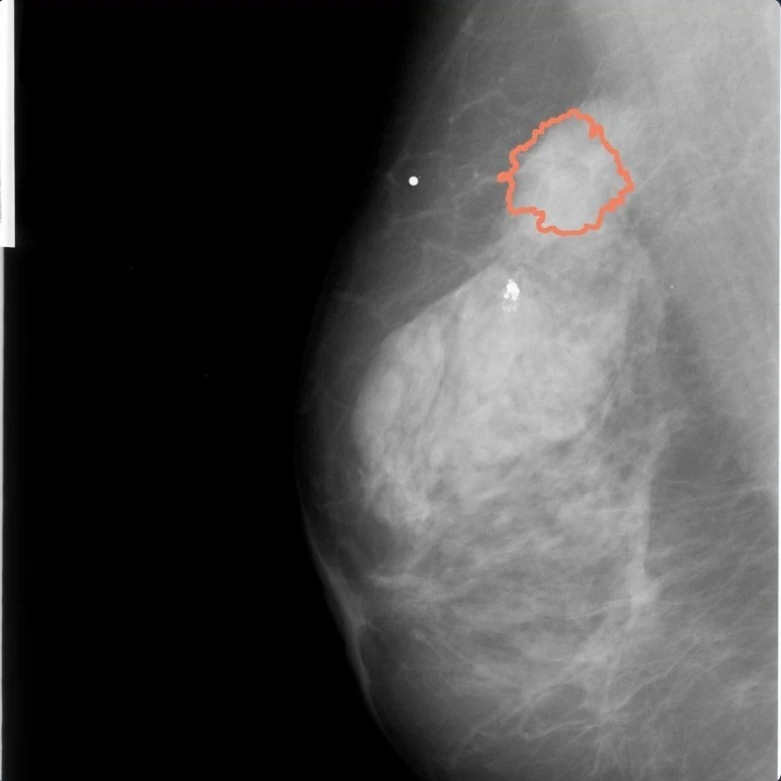
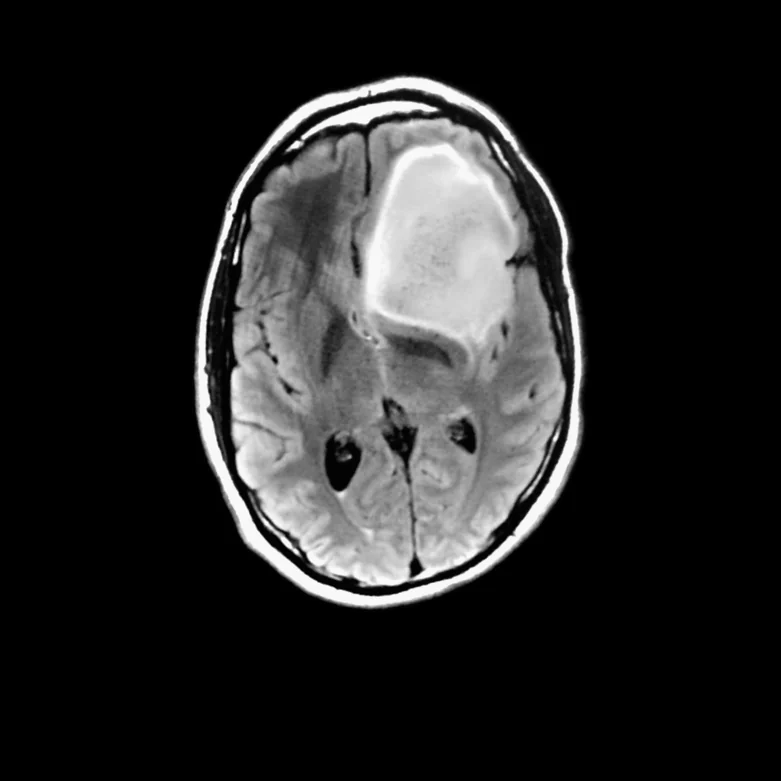
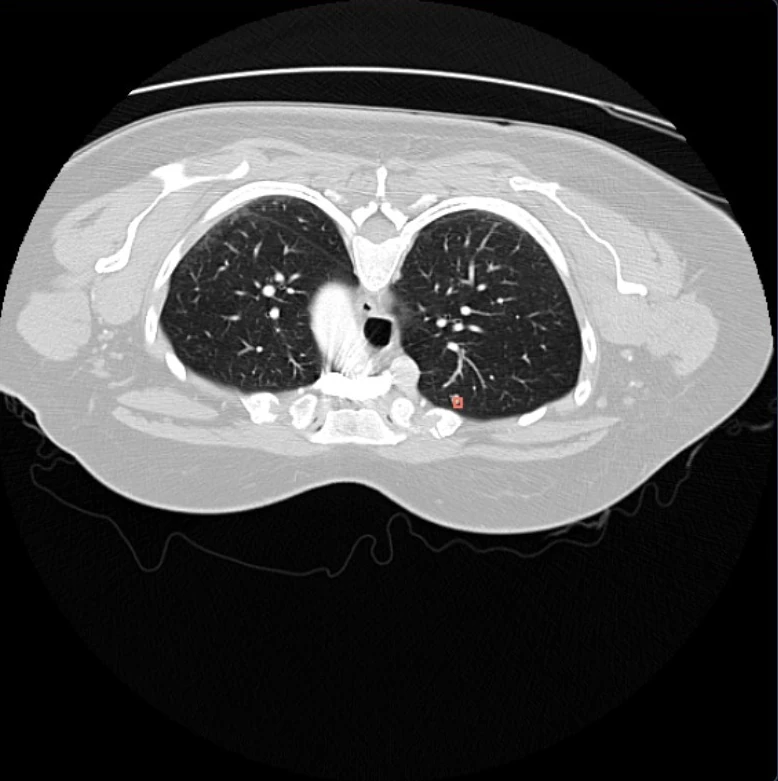
$ git clone https://github.com/oncolohealth/oncolohealth.git$ cd oncolohealth$ python3 -m cancer_workbench app# opens the researcher app at http://127.0.0.1:8765$ python3 -m unittest discover -s tests$ python3 -m cancer_workbench catalog validate$ python3 -m cancer_workbench fetch list$ python3 -m cancer_workbench fetch plan --tier default$ python3 -m cancer_workbench route --task feature_extraction --modality xray --anatomy bone$ uv venv$ uv pip install -e ".[ml]"# add the imaging and clip extras as needed$ .venv/bin/python -m cancer_workbench appThe imaging examples on this site come from public research datasets. Move across an image to magnify it. On touch, drag the lens; with a keyboard, focus the image and use the arrow keys.
These steps follow the project’s working rules in PROGRESS.md and AGENTS.md. Datasets and models also need the documentation set out in the contribution standard.
Read the contribution standard ↗Start with ARCHITECTURE.md for the code, PROGRESS.md for status and owners, and the research context for the scientific ground rules.
Put your name in the owner cell of one workstream in PROGRESS.md, from dataset curation (A) to independent review (H).
Treat other modules as fixed interfaces. If you need a change there, open an issue or pull request and tag its owner. Shared types and the manifest contract need review from two workstreams.
Mark fixtures SYNTHETIC and never report synthetic results as medical performance. Run python3 -m unittest discover -s tests before pushing; the core stays standard-library only.
Put deliverables in docs/reports/<workstream>-<topic>.md. Evidence states change only through a reviewed pull request to the catalog.
Questions, corrections, and contributions go through the GitHub repository.
OncoloHealth is early-stage research software. Find the right route for your question, see what the next release is planned to add, and cite the work you build on.
Research users work in the open repository. Commercial and partner conversations start with the partnerships team.
The code, the catalog, the reports, and the issue tracker are public. Support for research users happens there, where everyone can see the answer.
Bugs, reproducibility questions, and corrections to a dataset or model record. Include the command, your Python version, and the record id.
↗The BTXRD release audit, the source-shift follow-up, and how to read each kind of record.
↗Source, licence, access conditions, evidence state, and open questions for each record.
↗We work with research groups, data stewards, and organizations that want oncology tools built on clear evidence and shared learning.
Research teams, data stewards, and ecosystem partners: where we can work together and how a study starts.
↗Tell us about the work you have in mind, and we will scope it with you.
↗Dataset and model licences, access conditions, and inference permissions differ. Each must be reviewed for the intended use.
↗Project coordination. Start a conversation on LinkedIn.
↗Cite the repository with the commit you used, so others can reproduce your setup. Cite each dataset and model too: every catalog record carries its upstream citation.
Find a record’s citation ↗OncoloHealth contributors. (2026). Cancer AI research workbench (cancer-workbench, version 0.1.0) [Computer software]. GitHub. https://github.com/oncolohealth/oncolohealth@software{oncolohealth_workbench_2026, author = {{OncoloHealth contributors}}, title = {Cancer AI research workbench}, year = {2026}, version = {0.1.0}, url = {https://github.com/oncolohealth/oncolohealth}}git rev-parse HEAD to your methods section.Local demonstrations, open questions, and planned work from the project’s progress record. Availability depends on the setup; research demonstrations are not clinical validation.
Review and sharing safeguards for contributed datasets and models.
PlannedSource and version, permissions, private-information review, training provenance, and release context.
PlannedUnverified sources, permissions, or training-data documentation keep a contribution from release.
PlannedA licence for the project code remains to be chosen.
Open decisionThree-class, tumor vs normal, or benign vs malignant for BTXRD.
Open decisionConfirm label meanings and their reference standard from the source paper.
OpenA local research demonstration has run; its evidence, grouping and intended use still need review.
Local demonstrationCompatible inputs can be run in the configured local research setup. A result is not a validated diagnosis.
Research useA full-scan nodule-detection demonstration ran locally on an already-inspected sample; broader evaluation remains open.
Local demonstrationA segmentation demonstration ran locally on a public sample; training overlap and evaluation limits matter.
Local demonstrationLocal patch-level demonstrations and comparison heads have been examined; whole-slide grading remains open.
Research in progressA local assistant and tool workflows have been tested on the project machine. Further evaluation and failure review remain open.
Local researchShort answers drawn from the repository and the sharing standard.
A licence for the project code has not been chosen yet; it is an open decision in the progress record. Datasets and models keep their own licences and access terms, recorded in each catalog record.
Open a GitHub issue. For a catalog correction, name the record id and the source that supports the change. Evidence states change only through a reviewed pull request.
Not through this website, which does not accept uploads. The contribution workflow and its safeguards are planned for the next release. Model weights alone cannot establish that their training data were free of private information.
Python 3.11 or later for the core, which uses only the standard library. Model work and live scoring need the pinned ml extra. Storage needs vary by dataset and model. Check the current setup guide and configure a storage budget if needed.
On your machine. The researcher app binds to 127.0.0.1 and checks the host and a per-launch token. Downloads come from each record’s publisher, and the assistant connects to the endpoint profile you configure.
No. Dataset and model licences, access conditions, and inference permissions differ. Each must be reviewed for the intended use.
For collaboration and partnership questions, contact Jordi Nieves, who coordinates the project. For bugs and record corrections, open a GitHub issue.
Describe the question, the data and the help you need. The form can save answers in your browser session and prepares a brief for you to copy and send to Jordi on LinkedIn.
Copy it and send it to Jordi on LinkedIn, where collaboration conversations start.
Our proposed sharing standard calls for review of private information, permissions, and training provenance before datasets or models are shared.
Review for private
information.
Review training
provenance.
The website and the research workbench are separate. This page describes the current website experience.
Sharing a useful resource requires a clear record of where it came from, what it contains, and how it may be used.
The next release is planned to include safeguards for contribution review and sharing. Unverified sources, permissions, or training-data documentation should keep a contribution from being released.
The contribution workflow and its safeguards are planned for the next release. This website does not accept dataset or model uploads.
Model weights alone cannot establish that the training data were free of private information. Training-data provenance needs review alongside the contribution.
Explore the project’s existing records and documented research.
Dataset & model catalog ↗Research reports ↗We’re building a shared workbench for cancer research, connecting datasets, specialist models, data review, and evaluation.
A useful result needs a record of the data, model, permissions, and choices behind it.
OncoloHealth brings those records into the research workflow. Our work includes dataset and model catalogs, local specialist demonstrations, and exploratory studies of data quality and model performance.
The BTXRD audit is one example: duplicate images and label conflicts led to a closer review of the release and the limits of its published splits.
The project brings together work on implementation, research evaluation, and communication.
Contact Jordi on LinkedIn ↗The project builds on datasets, models, and methods released by the wider research community.
We keep source records and terms visible so researchers can inspect the work and review whether it fits their intended use. References to upstream work do not imply affiliation or endorsement.
Explore the datasets and models ↗